2026-10-16 ·
How Santa Ana Winds Influence Smoke and Soot Spread in Local Homes
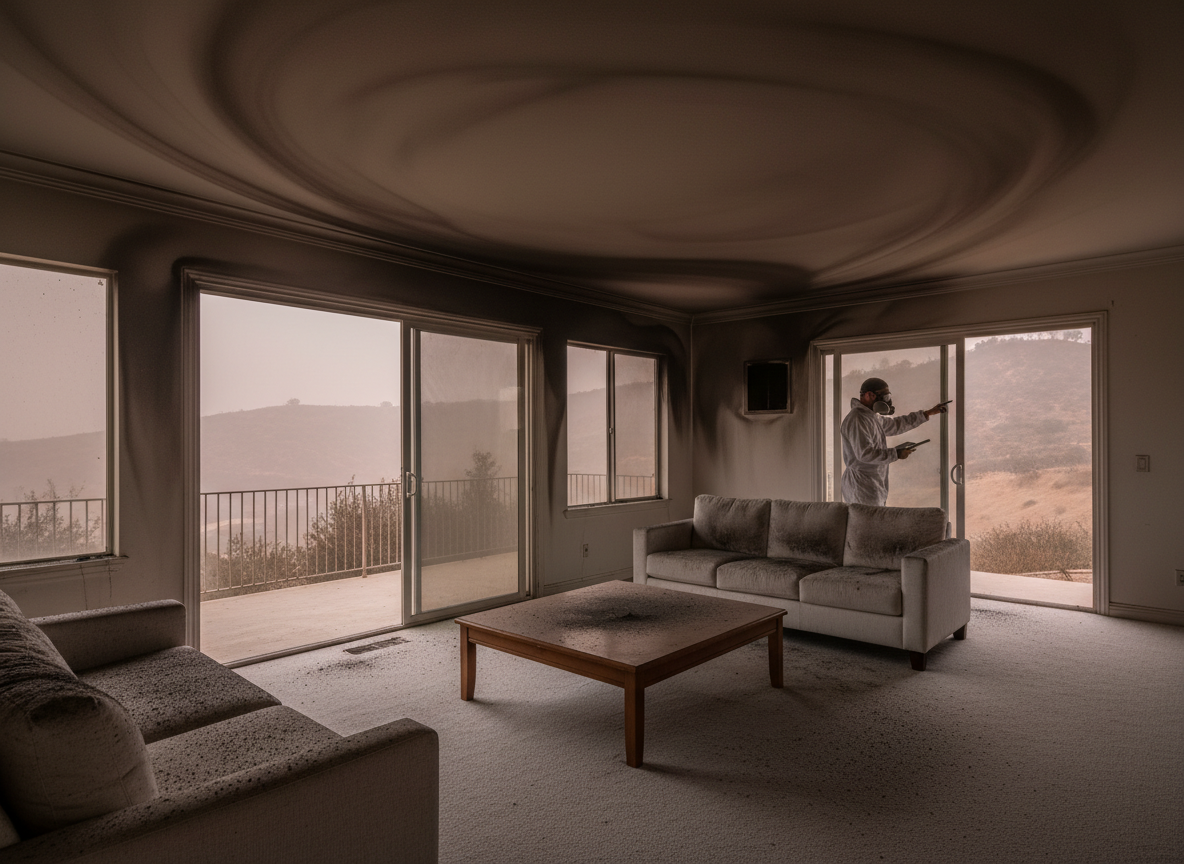
Santa Ana winds push smoke and soot from fires 30 to 60 miles into Bryn Mawr homes at speeds often exceeding 40 mph, forcing particles through attic vents, window seals, and HVAC intakes in older single-story ranch houses common to the area.
Santa Ana Wind Behavior Near Bryn Mawr
These winds form when high pressure builds over the Great Basin and air rushes downslope through the San Bernardino Mountains toward the valley floor. In Bryn Mawr and nearby Redlands, the dry flow strips moisture from vegetation and accelerates ember transport. Homes built before 1970 often have unsealed crawl spaces and single-pane windows that allow rapid infiltration. Once inside, soot settles on drywall, insulation, and ductwork within hours rather than days. The same pressure gradient that fans distant wildfires also pulls combustion byproducts from a kitchen fire in Colton or Loma Linda directly into local residences.
How Smoke Particles Travel Through Local Housing Stock
Bryn Mawr homes frequently feature asphalt-shingle roofs and stucco exteriors that trap heat under the eaves during wind events. Smoke rises through roof vents and then drops into attics when wind direction shifts. From there it migrates downward through recessed lighting and ceiling fans. Soot adheres more readily to textured popcorn ceilings and older fiberglass insulation than to modern materials. Residents in Grand Terrace and Mentone report visible residue on window screens after wind events lasting only six hours. The fine particles also travel through shared wall cavities in duplexes and triplexes along Juanita Street.
Impact on HVAC Systems and Hidden Spaces
Forced-air furnaces in San Bernardino County homes pull outside air during positive-pressure wind gusts. Filters rated MERV 8 or lower capture only the largest soot clumps, allowing smaller particles to coat coils and blower wheels. Once the system restarts after a power interruption common during Santa Ana events, the soot redistributes throughout every room. Attics above 1950s-era homes often contain loose-fill cellulose that holds odor molecules for months. Soot removal crews must disassemble duct sections and clean registers individually because standard vacuuming leaves residue that later off-gasses.
Restoration Steps That Counter Wind-Driven Contamination
Technicians begin by sealing HVAC intakes with plastic and tape before any interior work. HEPA air scrubbers run continuously for 48 to 72 hours to reduce airborne particulate below 10 micrograms per cubic meter. Drywall sections behind cabinets and in closets are removed when soot has penetrated the paper facing. Smoke remediation protocols include fogging with alkaline solutions to neutralize acidic residues left by burning synthetics. Homeowners in Highland and Riverside who followed these steps after the 2020 fires avoided repeated odor complaints. Removing lingering smoke odor from drywall and insulation after a house fire outlines the exact sequence used on properties near the 25967 Juanita St address.
Secondary Effects and When to Call for Help
Wind-driven soot often mixes with moisture from firefighting efforts, creating a corrosive paste on metal surfaces and electrical boxes. Handling secondary water damage from firefighting efforts in San Bernardino County homes details how this combination accelerates corrosion inside breaker panels. Crews at 24/7 response teams based at 25967 Juanita St, Bryn Mawr, CA 92318, USA inspect for hidden moisture with infrared cameras before any cleaning begins. Early intervention prevents the need for full structural repair after fire later in the season.