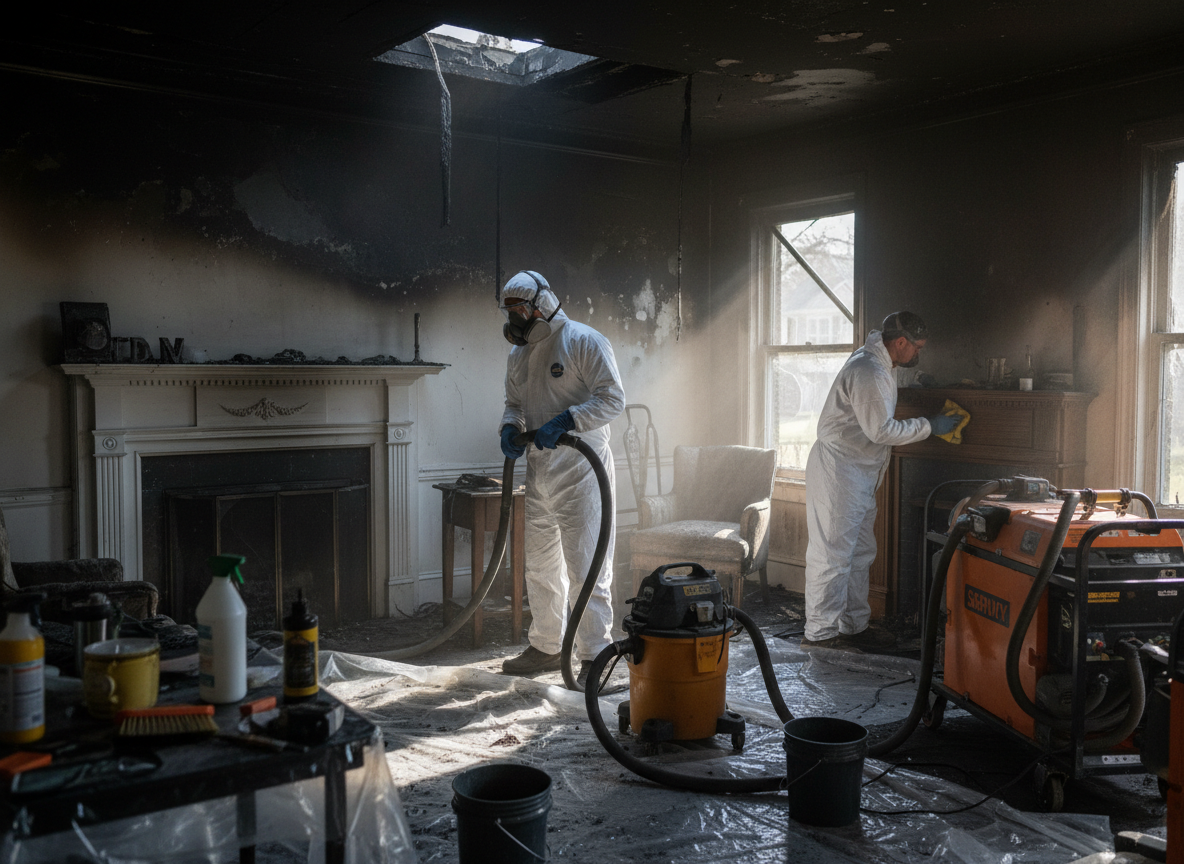
Smoke from structure fires in Bryn Mawr homes often travels through HVAC systems and settles into porous materials like drywall, insulation, and older wood framing common in San Bernardino County neighborhoods. Residue can remain acidic and continue etching surfaces days after the fire is out, requiring neutralization before any repainting or sealing. Technicians test pH levels on affected walls and ceilings to determine the right cleaning agents rather than using generic detergents that can lock odors in.
In single-story ranch homes around Juanita Street and nearby streets, smoke frequently migrates into attics and wall cavities through shared soffits and electrical penetrations. Removing it means pulling back insulation in targeted sections, vacuuming with HEPA equipment, and treating charred framing with enzyme-based deodorizers. Skipping these cavities leaves a persistent smell that returns when temperatures rise in summer.
Contents such as upholstered furniture and cabinetry require separate handling because smoke particles bond differently to fabric versus wood. Items are inventoried, cleaned in a controlled environment off-site when possible, and returned only after air quality readings confirm safe levels. Homeowners in Bryn Mawr often underestimate how far smoke travels into closets and drawers, leading to repeated cleaning cycles if the initial assessment misses these zones.
Technician insight
In Bryn Mawr the thing that catches most people out with smoke damage restoration is how fast residue moves through the shared attic spaces in the older single-story homes near Loma Linda. Homeowners clean the obvious rooms and think they're done, but six weeks later when the first heat wave hits the smell comes right back through the vents because the cavities were never addressed.
Attic Smoke Migration in Bryn Mawr Home
Smoke from a kitchen fire had traveled through ceiling joists into the attic of a 1960s ranch house. We found heavy soot on insulation and rafters that standard surface cleaning would miss. After removing and replacing insulation sections plus treating the framing, the odor was eliminated and the family moved back in without further issues.
How it works
- 1
Initial Assessment
Technicians arrive within hours, document visible and hidden smoke paths, and test surfaces for acidity and odor depth.
- 2
Containment and Ventilation
Negative air machines isolate affected rooms while HEPA filtration captures airborne particles before they spread to unaffected areas.
- 3
Surface and Cavity Cleaning
Walls, ceilings, and exposed framing receive pH-neutral cleaning followed by thermal fogging or ozone treatment for embedded odors.
- 4
Final Verification
Air sampling and visual inspection confirm residue removal before contents are returned and reconstruction begins.
Pricing
Cost depends on square footage affected, depth of smoke penetration into cavities, and whether contents require separate cleaning.