2026-10-16 ·
Removing Lingering Smoke Odor From Drywall and Insulation After a House Fire
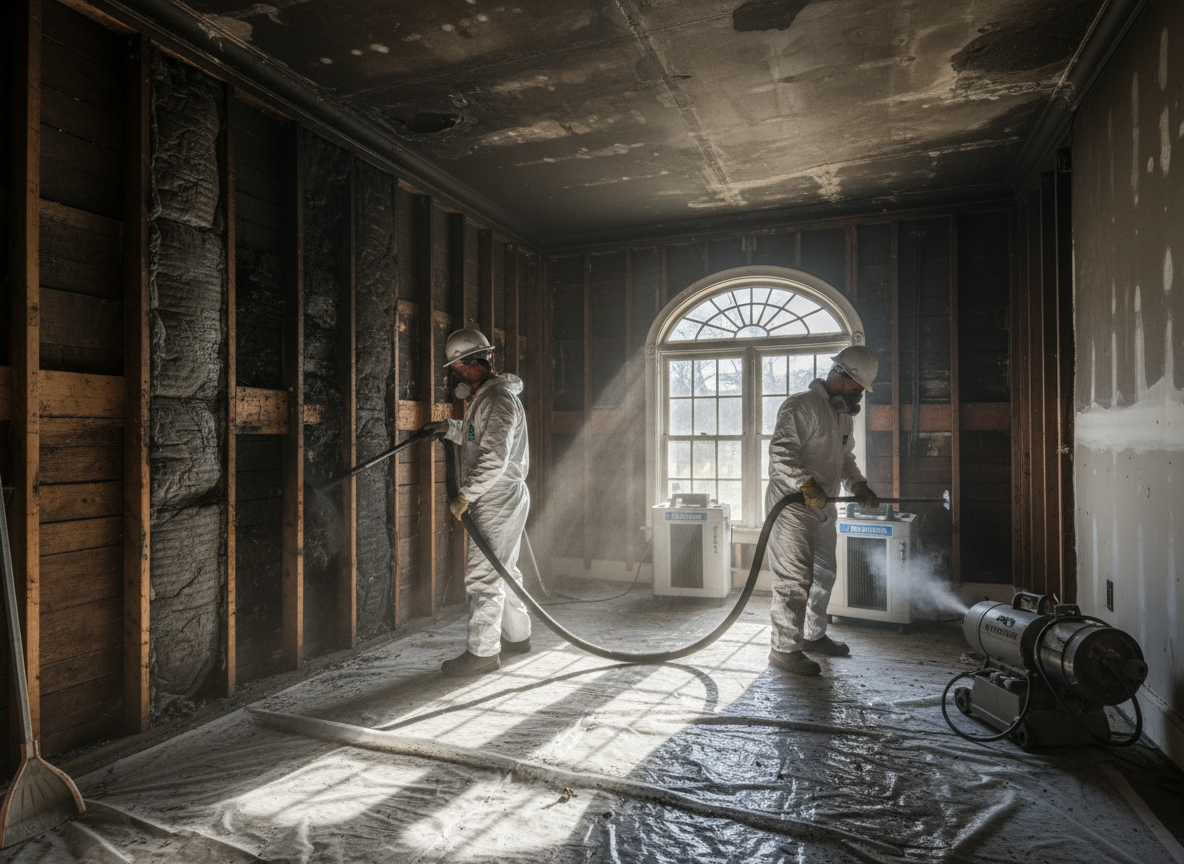
In Bryn Mawr homes, removing lingering smoke odor from drywall and insulation after a house fire usually takes professional ozone treatment or hydroxyl generators combined with partial or full material replacement when porous layers have absorbed particulates deeply. Surface sprays or air fresheners fail because smoke residues bond to gypsum cores and fiberglass or cellulose fibers, releasing volatile compounds for months in the dry San Bernardino County climate.
Assessing Smoke Penetration in Local Drywall and Insulation
Bryn Mawr housing stock from the 1960s through 1990s often features single-layer drywall over wood framing with blown-in or batt insulation that readily absorbs smoke during fires. Start by cutting small inspection openings in walls and ceilings of affected rooms to check for visible soot lines and odor strength at different depths. In neighborhoods near Juanita Street, fires that reach the attic spread residues quickly through shared wall cavities, especially when Santa Ana winds push smoke into every seam. Test multiple spots because odor can linger in insulation even when drywall surfaces appear clean. Document penetration levels before deciding on cleaning versus replacement to avoid repeated callbacks.
Material Removal Versus In-Place Treatment Options
When smoke has saturated insulation, removal is the only reliable method because cleaning fluids cannot reach the interior fibers without leaving moisture that later promotes mold. Cut out drywall sheets 12 to 18 inches beyond visible soot lines and dispose of contaminated batts or blown-in material in sealed bags. For borderline cases, apply an encapsulating primer after HEPA vacuuming, but only if odor testing with a moisture meter shows readings below 15 percent. Homeowners in surrounding areas like Redlands and Loma Linda often discover that partial removal in bedrooms prevents odor migration into living spaces during the dry season. Always seal off work zones with plastic sheeting and negative air machines to protect unaffected portions of the structure.
Ozone and Thermal Fogging for Remaining Odors
After material removal, ozone generators sized for the room volume break down residual smoke molecules trapped in remaining drywall and subflooring. Run units at 5,000 to 10,000 mg per hour for 24 to 48 hours with HVAC systems isolated, then ventilate thoroughly before re-testing. Thermal fogging with odor-neutralizing compounds follows in some San Bernardino County homes where porous wood framing continues to off-gas. These steps tie directly into odor removal after fire protocols that address the same odor pathways common after kitchen or electrical fires. Re-check air quality with an odor meter 48 hours later, because Santa Ana wind events can reintroduce particulates if exterior vents were not sealed during the initial incident.
Preventing Recontamination in Bryn Mawr Homes
Replace insulation with new material meeting current R-value standards and install new drywall with proper taping before painting with stain-blocking primer. Run HVAC systems with new filters for several days while monitoring for any return of odor, especially in homes near Highland or Colton where older ductwork can harbor residues. Homeowners who skip these final verification steps frequently report odor returning during the first winter heating cycle. For full restoration details, review how Santa Ana winds influence smoke and soot spread in local homes to understand seasonal factors that affect long-term results.