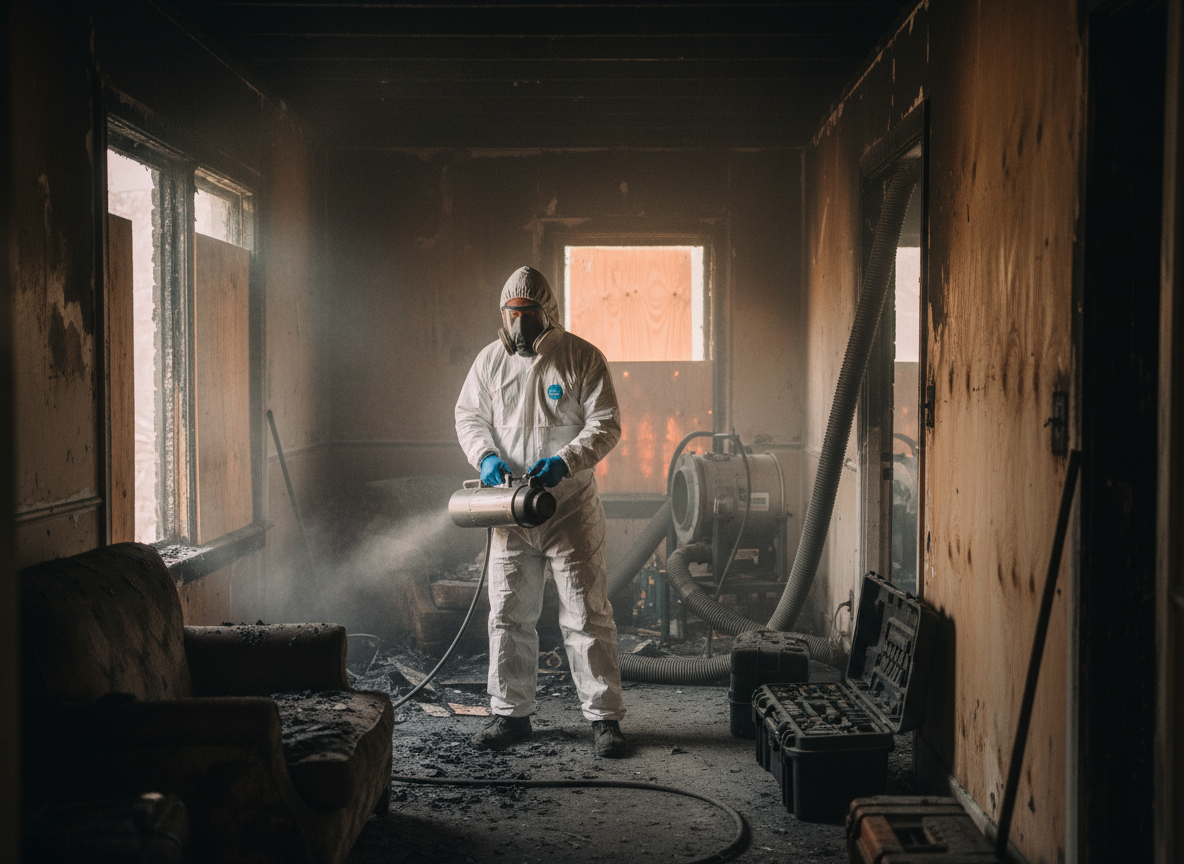
Smoke odor lingers in Bryn Mawr homes because older construction with plaster and lath allows particles to embed deep in cavities. Standard cleaning fails when humidity from seasonal changes reactivates smells in insulation and framing. Technicians use thermal fogging and hydroxyl generators to break down residues without masking agents that later fail in San Bernardino County conditions.
HVAC systems in Bryn Mawr properties often spread odors through ductwork after fires, requiring full disassembly and treatment of coils and returns. Porous materials like carpet padding and drywall must be removed when charring reaches beyond surfaces. Skipping these steps leaves persistent smells that surface weeks later once windows are opened during warmer months.
Edge cases include protein-based odors from kitchen fires common in single-story homes near Juanita Street, where grease residues bond to concrete slabs. Proper neutralization demands pH-balanced agents and repeated air scrubbing. Homeowners sometimes attempt ozone units alone, which can damage fabrics and leave a metallic after-scent that requires additional remediation.
Code considerations in the Bryn Mawr area focus on proper disposal of contaminated materials to avoid ground contamination in the local soil. Technicians document every step for insurance and ensure ventilation meets county standards before reoccupancy. This prevents secondary issues like mold growth in treated spaces during cooler nights.
Technician insight
In Bryn Mawr, the thing that catches most people out with Odor removal after fire is how the area's older single-story homes with unsealed attics let smoke travel into insulation that then reactivates smells after the first winter rain raises local humidity.
Lingering Smoke in Bryn Mawr Attic
A kitchen fire left odors throughout a home near Juanita Street. Inspection revealed smoke had traveled into the unsealed attic insulation. Technicians removed affected material, treated cavities with fogging, and cleaned the HVAC. Odors did not return after seasonal humidity changes.
How it works
- 1
Initial Assessment
Inspect all affected rooms, HVAC, and hidden cavities to map smoke migration patterns specific to Bryn Mawr housing stock.
- 2
Source Removal
Extract charred and saturated materials, then clean surfaces with specialized agents before sealing.
- 3
Odor Neutralization
Apply thermal fogging and hydroxyl treatment throughout the structure and ductwork.
- 4
Verification and Clearance
Test air quality and recheck after humidity shifts to confirm odors are eliminated.
Pricing
Pricing varies by home size, smoke depth, and materials affected; upfront quotes provided after inspection.