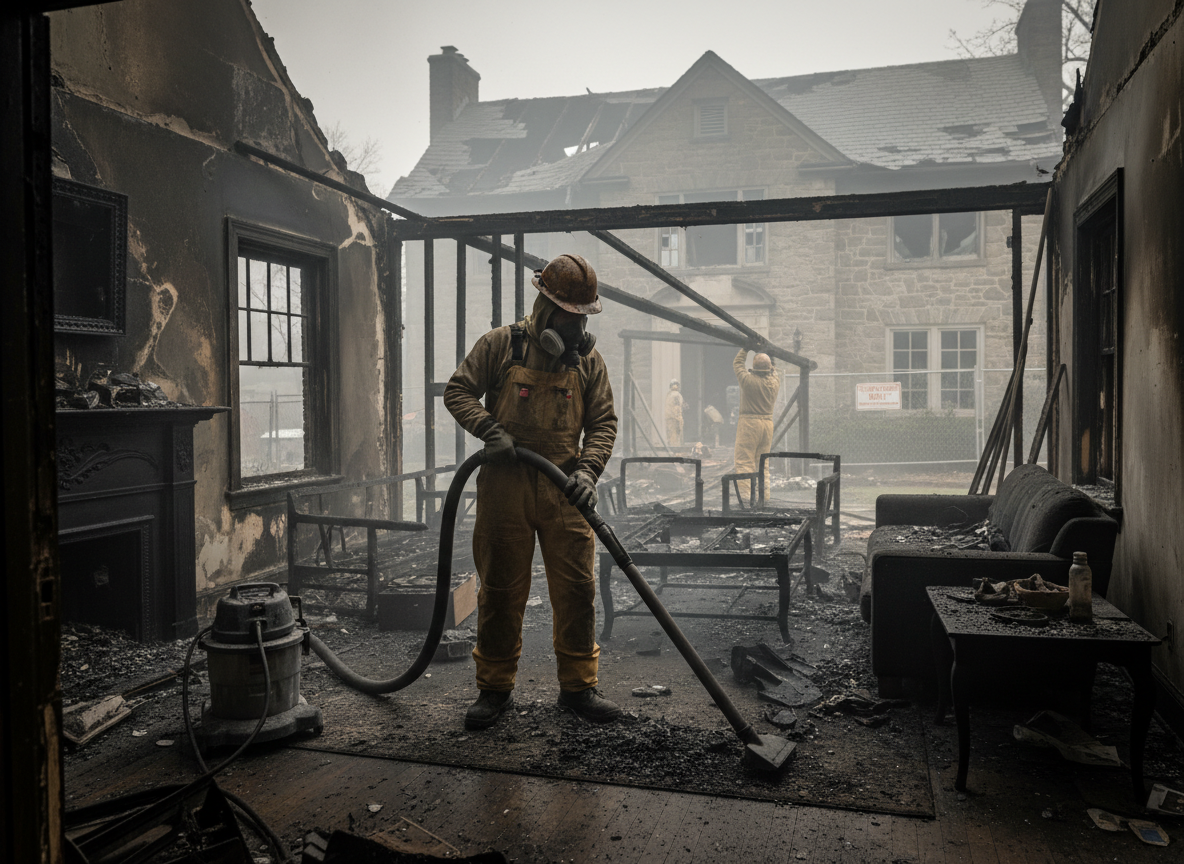
Emergency fire damage restoration in Bryn Mawr starts with securing the site to prevent further soot migration, especially in the older single-family homes common along streets like Juanita St where original plaster and lath construction allows smoke to travel through wall cavities. Crews assess ventilation patterns created by the region's dry winds that can carry fine particles into attics and crawl spaces not found in newer builds. Containment barriers and negative air machines are set up immediately to isolate affected zones before any cleaning begins.
Soot removal requires different chemistry depending on whether the fire involved synthetic materials or natural fuels, and Bryn Mawr's mix of mid-century homes often contains both. Technicians test surfaces on site because alkaline residues from certain fires can etch glass and discolor metals if left untreated. Hidden moisture from suppression water must be located with meters since the area's low humidity can mask damp pockets that later cause mold behind baseboards.
Final clearance testing checks for remaining odors and particulates using equipment calibrated for the specific smoke types encountered in San Bernardino County residential fires. Homeowners receive a written scope that details which materials were removed versus cleaned so they can coordinate with insurance adjusters familiar with local claim patterns.
Technician insight
In Bryn Mawr the thing that catches most people out with Emergency fire damage restoration is how the 1950s and 1960s housing stock around Juanita St lets smoke travel through shared attic spaces and plaster voids when the dry county winds pick up, so what looks like a contained kitchen fire often requires opening ceilings two rooms away.
Attic Fire Smoke Migration
A small electrical fire in a Bryn Mawr garage spread soot upward through an open chase. Inspection showed residue had traveled across the shared attic into two bedrooms. Crews contained the main area, cleaned all accessible surfaces, and sealed the chase before drying. The home passed clearance testing within four days.
How it works
- 1
Site Security and Assessment
Board up openings and document visible damage while testing for hidden smoke paths in walls and attics.
- 2
Containment and Air Filtration
Install physical barriers and run HEPA air scrubbers to stop soot from spreading to unaffected rooms.
- 3
Soot and Residue Removal
Apply appropriate cleaning agents to surfaces, contents, and HVAC components based on residue type.
- 4
Drying and Odor Neutralization
Extract remaining moisture and treat air with equipment that targets embedded smoke odors.
- 5
Clearance and Handover
Perform final inspections and provide documentation for insurance and re-occupancy.
Pricing
Upfront quotes issued after on-site inspection; final cost depends on square footage affected, material types, and smoke travel distance.