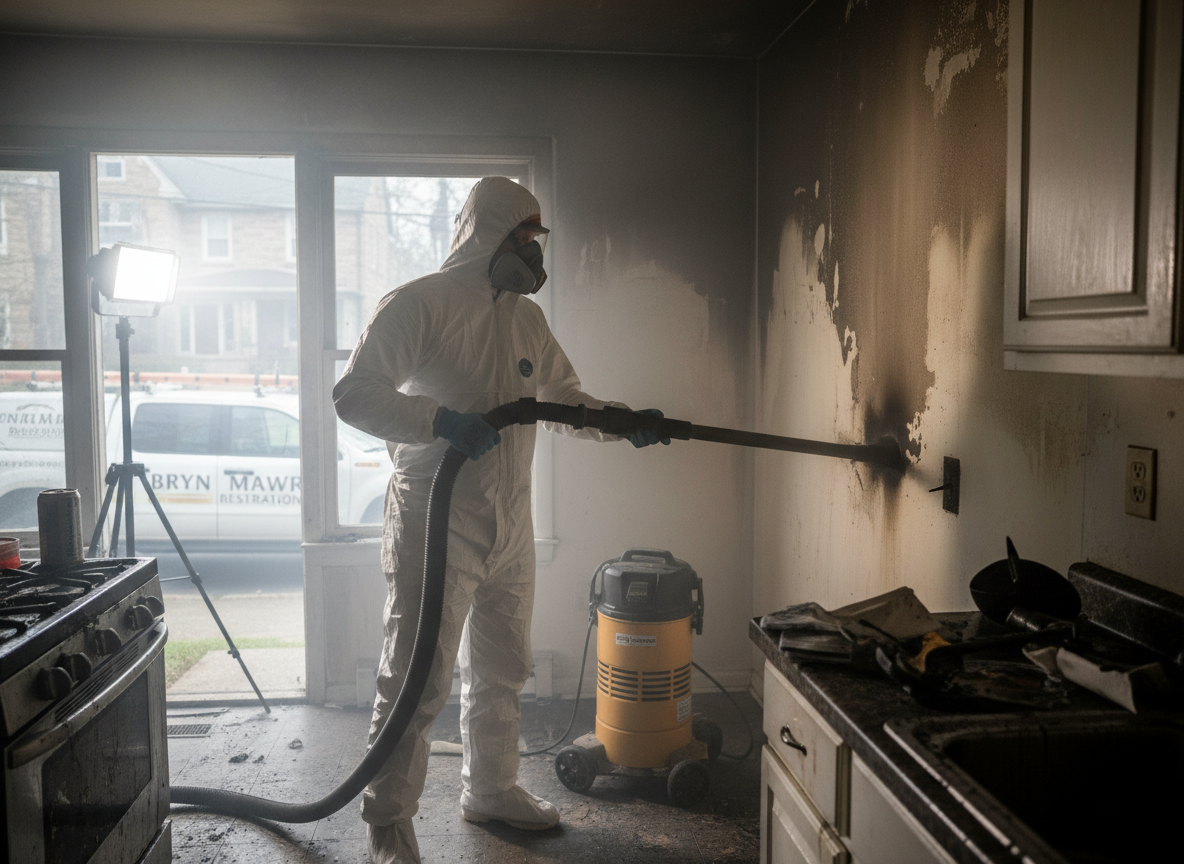
Smoke from structure fires in Bryn Mawr travels through HVAC systems and settles into porous materials common in San Bernardino County homes. Technicians begin with thermal imaging to locate hidden residues behind drywall and in attics, then isolate affected zones to prevent cross-contamination during removal. Alkaline cleaners neutralize acidic soot on concrete and wood surfaces while HEPA filtration captures fine particles that standard vacuums miss.
Older single-story homes near the 25967 Juanita St address often feature plaster walls and popcorn ceilings that trap smoke odor for months if not treated with specialized sealers. Dry seasonal winds in the Bryn Mawr area push smoke deeper into wall cavities, requiring fogging agents that reach behind fixtures without demolition. Technicians test pH levels on every surface before applying primers to avoid blistering on new paint.
Ventilation restoration follows cleaning to restore airflow without reintroducing odors through shared ductwork common in Bryn Mawr neighborhoods. Final clearance uses both visual inspection and odor detection equipment to confirm no residual smoke remains. Homeowners receive a written scope that details every room treated and materials replaced.
Technician insight
In Bryn Mawr the thing that catches most people out with smoke remediation is how quickly soot bonds to the textured ceilings found in many 1970s homes here once the Santa Ana winds stop. Homeowners often try wiping it themselves and drive the residue deeper into the plaster, doubling the labor needed later.
Kitchen Fire Smoke in Adjacent Bedrooms
Smoke from a stove fire migrated through open doors into two bedrooms of a single-story home in Bryn Mawr. Inspection showed heavy soot on ceiling textures and inside the shared return duct. Crews contained the rooms, cleaned all surfaces and ducts, then sealed and painted. Odor testing passed on the second day and the family moved back in without further issues.
How it works
- 1
Initial Assessment
Technicians inspect all surfaces, HVAC runs and attic spaces to map smoke migration patterns throughout the property.
- 2
Containment Setup
Plastic barriers and negative air machines isolate affected rooms to stop soot particles from spreading to clean areas.
- 3
Soot Removal
HEPA vacuums and chemical sponges lift residues from hard surfaces while porous items are evaluated for salvage or disposal.
- 4
Odor Neutralization
Hydroxyl generators and thermal fogging treat remaining odors in cavities and fabrics before final sealing.
- 5
Clearance Testing
Visual and olfactory checks plus air sampling confirm the space meets restoration standards before reoccupancy.
Pricing
Project pricing depends on square footage affected, materials involved and whether HVAC cleaning is required; upfront quotes provided after inspection.