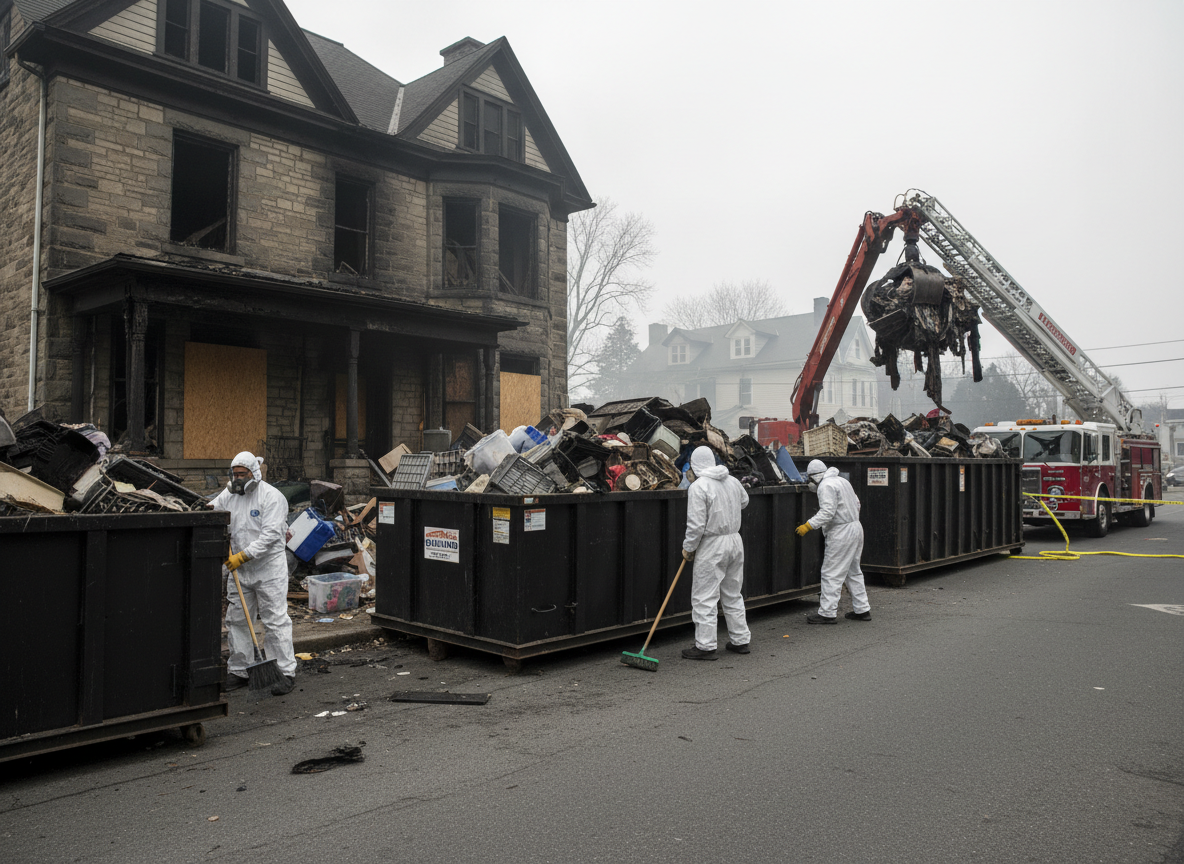
Hoarding cleanup after fire combines structural drying, debris removal and odor neutralization in properties where accumulated items intensify smoke penetration. In Bryn Mawr the dry air and occasional Santa Ana winds push soot deep into wall cavities and insulation, requiring removal of both contents and affected building materials rather than surface cleaning alone. Technicians must sort through layers of stored goods while maintaining negative air pressure to keep particulates from migrating into unaffected rooms.
Edge cases appear when fire starts near stacked paper or fabric; these materials create long-burning pockets that char subfloors and joists. Older Bryn Mawr housing stock often features narrow hallways and low attics that limit equipment access, so crews stage HEPA filtration units outside and run flex ducting inward. All waste must follow San Bernardino County disposal rules for fire-damaged refuse, including documentation of items removed to satisfy insurance adjusters.
Post-cleanup verification includes moisture readings below 15 percent and air sampling for VOCs before any reconstruction begins. Homeowners should expect temporary relocation when entire rooms are gutted, and they receive a written scope that separates salvageable items from those requiring disposal. This documentation protects against later disputes over what was present before work started.
Technician insight
In Bryn Mawr, the thing that catches most people out with hoarding cleanup after fire is how the dry climate lets smoke travel through the many unsealed attic hatches and crawlspace vents found in the older single-story homes along streets like Juanita.
Attic Fire in Hoarded Bryn Mawr Home
A kitchen fire spread into stored boxes in the attic of a single-story house. Crews found smoldering insulation mixed with paper that had dropped between ceiling joists. All contents were removed, cavities were cleaned and dried, and the home passed air-quality testing before drywall repair began.
How it works
- 1
Initial Safety Assessment
Technicians arrive in full PPE, secure the structure, and map fire-weakened floors and hoarded pathways before any material handling begins.
- 2
Content Removal and Sorting
Items are categorized on-site into salvage, contaminated, and hazardous waste streams while maintaining chain-of-custody records for insurance.
- 3
Structural Cleaning and Odor Control
Soot is removed from surfaces, followed by thermal fogging or ozone treatment to neutralize embedded smoke odor in porous materials.
- 4
Final Clearance and Documentation
Moisture meters and air tests confirm the space meets habitability standards; a detailed report is provided for the property owner and insurer.
Pricing
Scope and volume determine final cost; upfront written estimates are provided after the safety assessment.