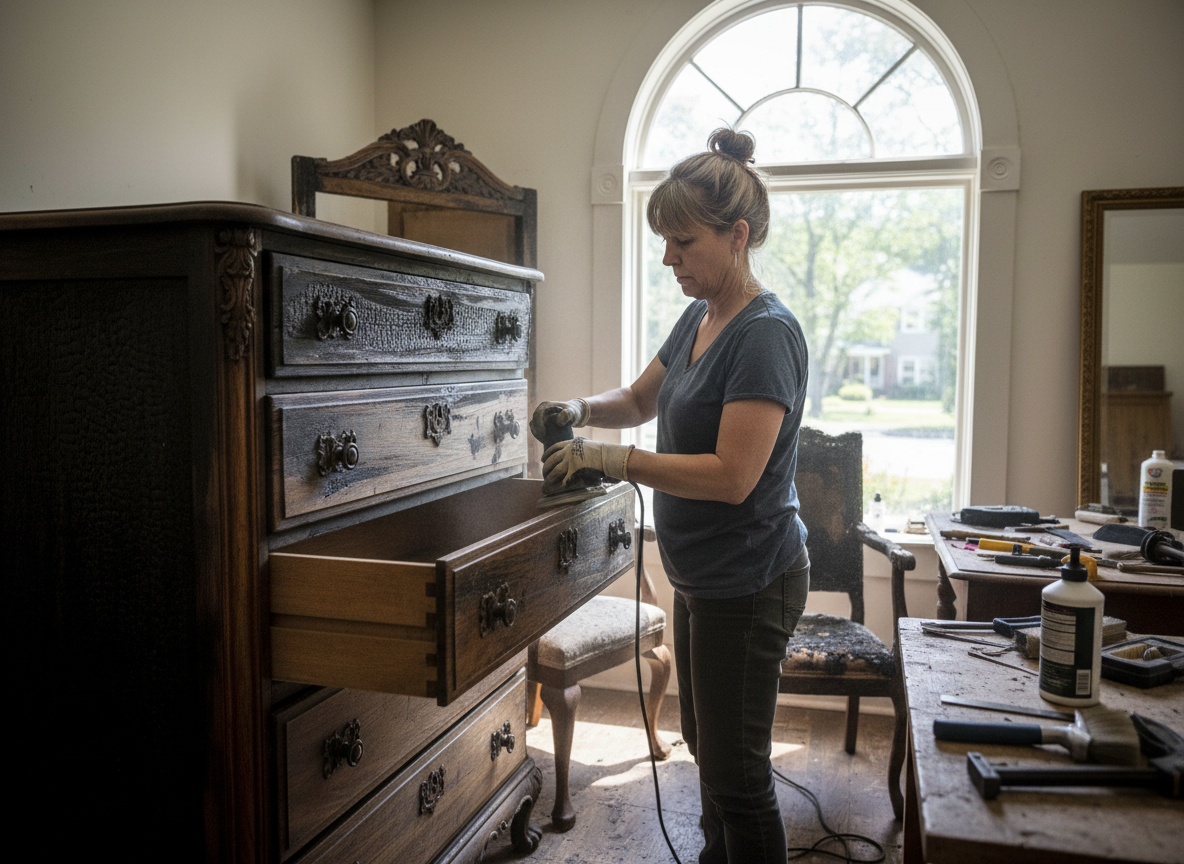
Fire-damaged furniture in Bryn Mawr homes often suffers layered smoke penetration through porous woods and fabrics common in mid-century San Bernardino County residences. Soot bonds differently to oak versus pine or to cotton versus synthetic upholstery, requiring targeted pH-neutral cleaners and HEPA vacuuming before any refinishing. Suppression water left in drawers or under cushions quickly leads to mold in the area's low-humidity yet temperature-swing climate, so technicians must disassemble pieces on-site to inspect joints and hidden cavities.
Edge cases include antique pieces with shellac finishes that cloud permanently from alkaline smoke residues and leather seating that stiffens after water exposure. Technicians test each material first because aggressive solvents can lift original stains or damage veneers typical in older Bryn Mawr housing stock. When structural frames warp from heat, restoration stops and replacement recommendations follow to avoid safety issues during future use.
Code considerations arise when furniture sits near electrical outlets or gas appliances; any charring requires verification that wiring or lines were not compromised before the piece returns indoors. Homeowners should never attempt DIY ozone treatments on upholstered items because trapped moisture plus ozone can degrade foam and create off-gassing that lingers in small Bryn Mawr living spaces.
Technician insight
In Bryn Mawr, the thing that catches most people out with fire-damaged furniture restoration is how quickly suppression water soaks into particleboard bases common in 1970s tract homes along Juanita Street and surrounding blocks; once the particleboard swells it cannot be saved and trying to hide it only delays the need for replacement.
Kitchen Fire Smoke on Dining Set
A kitchen fire in a Bryn Mawr home sent smoke through the open floor plan and coated an oak dining set. We found heavy soot inside the table pedestal and water residue under the chair seats from hose lines. After disassembly, targeted cleaning and refinishing, the set returned to use without odor or residue.
How it works
- 1
Initial Assessment
Technician inspects each piece at the Bryn Mawr property for smoke depth, water saturation and structural integrity.
- 2
Content Removal and Segregation
Items are tagged, photographed and moved to a controlled drying area to prevent cross-contamination between heavily and lightly affected pieces.
- 3
Cleaning and Deodorization
HEPA vacuuming, specialized solvent application and odor neutralization occur based on material type and smoke residue.
- 4
Repair and Refinishing
Loose joints are stabilized, surfaces are refinished where safe, and final inspection confirms no lingering odors before return.
Pricing
Cost depends on number of pieces, material types and extent of smoke versus water damage.