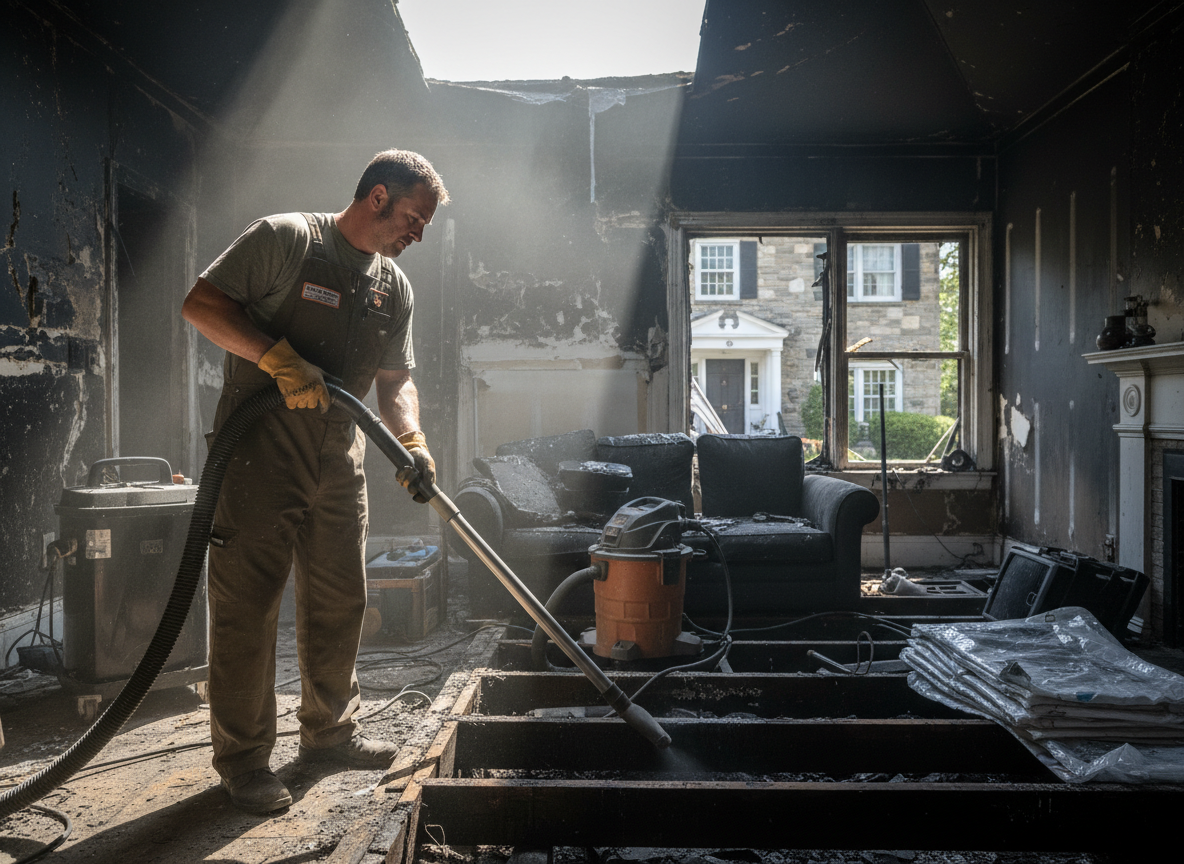
Fires in Bryn Mawr homes often start in kitchens or garages and quickly affect older wood-frame construction common throughout the area. Smoke travels through shared wall cavities and attic spaces, leaving residue on insulation and wiring that requires targeted removal rather than surface cleaning alone. Technicians must check for hidden charring behind lath and plaster or in crawl spaces where embers can linger and reignite.
Soot from synthetic materials in modern furnishings bonds differently to porous surfaces like drywall and carpet than residue from wood fires, changing the cleaning sequence. In Bryn Mawr’s dry inland climate, low humidity can make certain residues more brittle and easier to dislodge, while others set harder and demand specialized solvents. Proper containment prevents cross-contamination into unaffected rooms during the removal phase.
After initial suppression, structural assessment focuses on load-bearing members that may have lost integrity from prolonged heat exposure. Electrical systems in older Bryn Mawr properties frequently need isolation and testing because melted insulation inside walls creates hidden fire hazards that surface only during demolition. Documentation of every step supports insurance claims without delays.
Seasonal Considerations
Dry Santa Ana wind periods increase the chance of rapid fire spread between neighboring properties in Bryn Mawr, requiring crews to prioritize exterior soot removal on siding and roofs before interior work begins.
Technician insight
In Bryn Mawr, the thing that catches most people out with Fire damage restoration near me is how many 1950s and 1960s homes still have original knob-and-tube wiring that melts inside walls during even small fires, forcing extra demolition that homeowners never expect until we open the cavities.
Kitchen Fire in Bryn Mawr Home
A cooking fire spread smoke through the kitchen into the living room and attic. Inspection found heavy soot in HVAC ducts and charring along ceiling joists. Crews removed affected insulation, cleaned the ductwork, treated remaining surfaces and restored the space without further structural loss.
How it works
- 1
Emergency Board-Up
Secure openings to prevent weather and unauthorized entry while protecting remaining contents.
- 2
Smoke and Soot Removal
Clean affected surfaces using methods matched to residue type and surface material.
- 3
Structural Drying and Demolition
Remove damaged drywall, insulation and flooring then dry the structure to prevent secondary mold.
- 4
Odor Neutralization
Apply thermal fogging or ozone treatments where smoke odor persists in porous materials.
- 5
Rebuild and Final Inspection
Restore finishes and verify all hidden areas are clean before returning the property.
Pricing
Cost depends on square footage affected, smoke migration depth and whether structural members require replacement; upfront quotes provided after inspection.