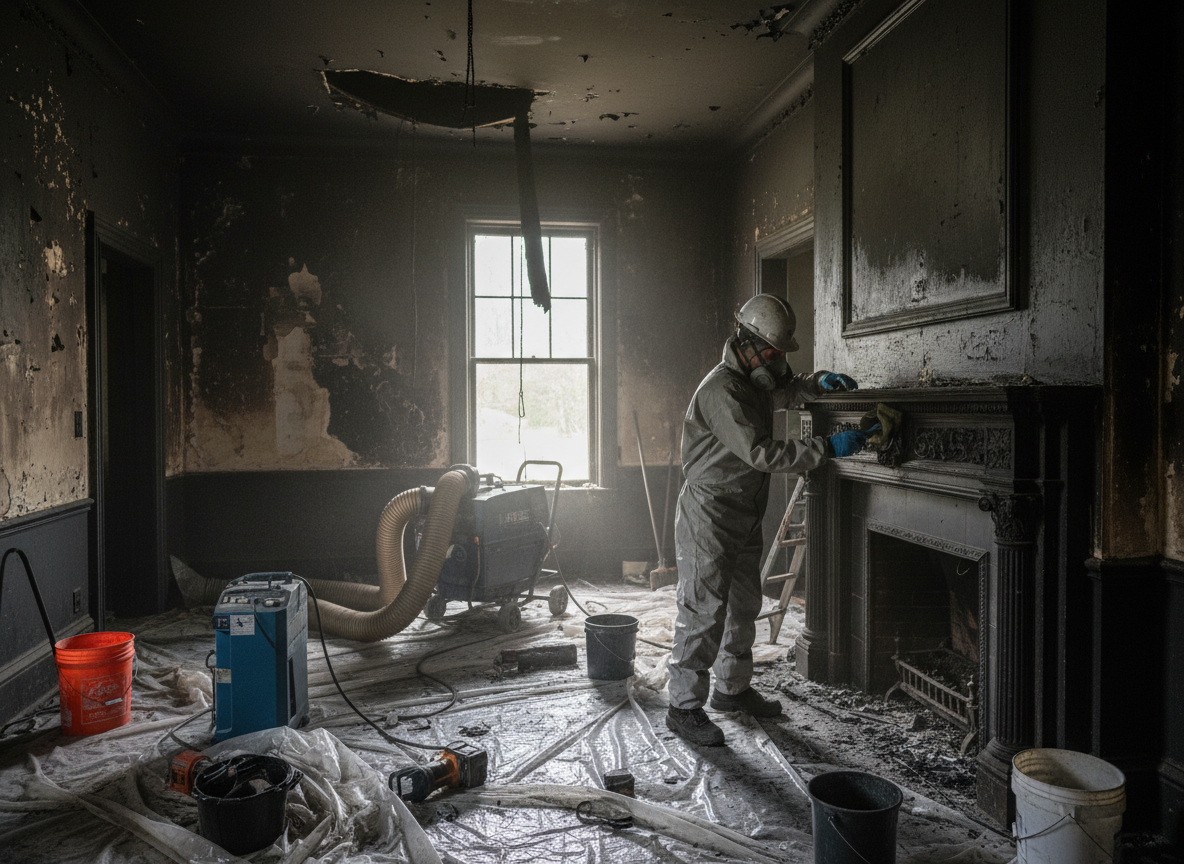
Fire damage in Bryn Mawr often starts in kitchens or electrical systems of older single-family homes common throughout the neighborhood. Smoke travels through shared attics and wall cavities in these structures, leaving residue on insulation and framing that standard cleaning misses. Restoration requires separating affected materials from unaffected ones before corrosion sets in on metal components and HVAC ducts. Technicians test pH levels on surfaces because alkaline soot from certain fuels can damage drywall and wood if left untreated for more than a few days.
San Bernardino County properties near Bryn Mawr face added challenges from seasonal winds that push smoke deeper into crawl spaces and under eaves. Restoration crews must map airflow patterns in each home rather than relying on visible soot alone, since invisible particulates settle in insulation and carpet padding. Removing and replacing these hidden layers prevents recurring odors once humidity rises. Work follows local building codes for electrical and plumbing tie-ins when walls are opened during the process.
Edge cases include fires that reach stucco exteriors or affect attached garages common in the area. These require specialized extraction equipment to pull particulates from porous concrete without spreading dust to neighboring units. Homeowners should avoid running HVAC systems until ducts are inspected, as fans can redistribute contaminants throughout the house.
Technician insight
In Bryn Mawr the thing that catches most people out with fire and smoke damage restoration is how quickly smoke moves through the open attic spaces in the older tract homes off Juanita Street. Homeowners often think wiping visible walls is enough, but the real job is pulling insulation and sealing cavities before the next Santa Ana wind pushes residue back into living areas.
Kitchen fire spread to attic
A cooking fire in a Bryn Mawr home sent smoke through ceiling vents into the attic shared with the garage. Inspection showed heavy soot on rafters and insulation but no structural burn-through. Crews removed affected insulation, cleaned ductwork, and treated odors before reinstalling new materials and verifying clearance.
How it works
- 1
Initial Assessment
Technicians arrive on site, document visible and hidden damage, and test surfaces for soot type and pH to guide the cleanup plan.
- 2
Containment And Safety
Areas are sealed to prevent cross-contamination, power is isolated where needed, and air filtration begins to protect remaining living spaces.
- 3
Cleaning And Odor Removal
Soot is removed from surfaces, ducts, and contents using appropriate solvents; thermal fogging or ozone treats embedded odors in porous materials.
- 4
Repairs And Restoration
Damaged drywall, insulation, and trim are replaced, followed by painting and final verification that no smoke residue remains.
Pricing
Upfront quotes after inspection; final cost depends on square footage affected, materials involved, and extent of hidden damage.