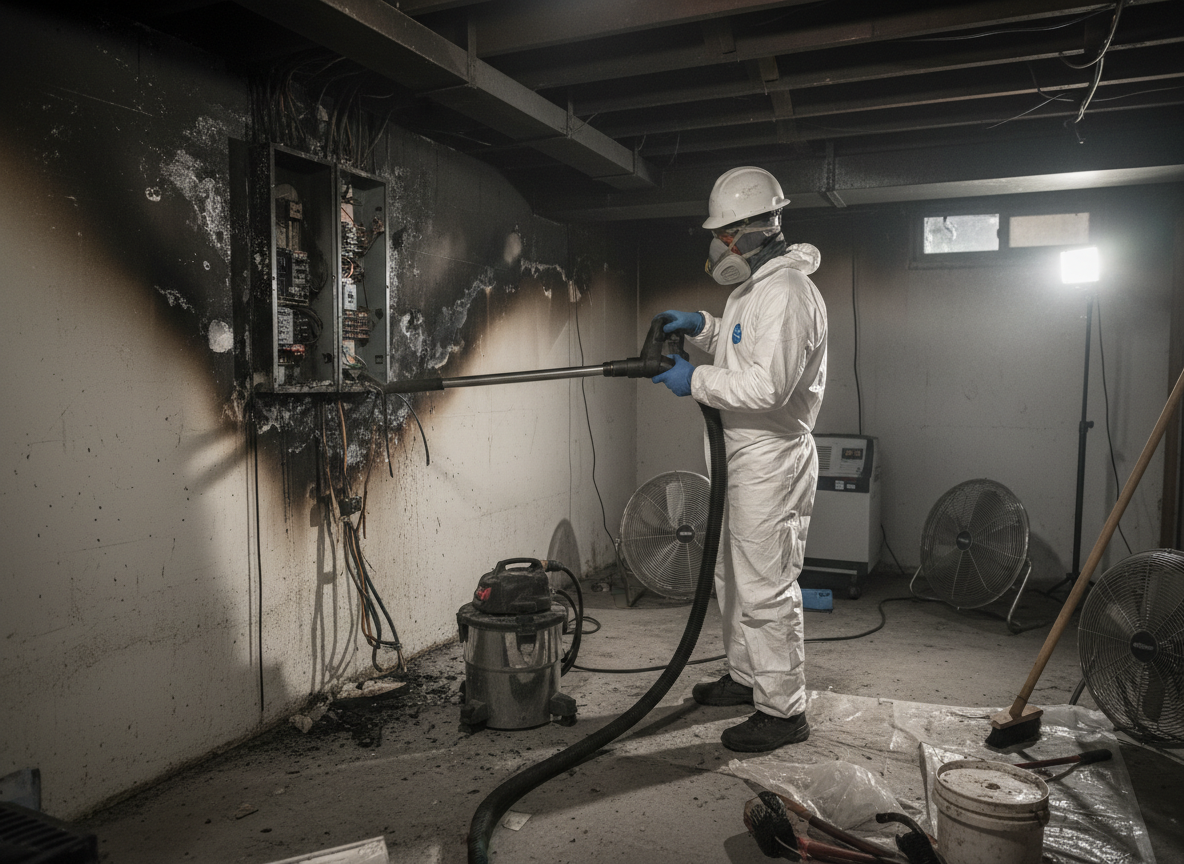
Electrical fires in Bryn Mawr often start in older residential wiring found in single-story homes built from the 1950s through 1970s. When circuits overload or outlets arc, the resulting soot travels through attic spaces and wall cavities, embedding into fiberglass insulation and wood framing. Cleanup must address both visible char and microscopic particles that can corrode remaining copper lines if left untreated. Technicians begin by isolating the affected panel and running negative-air machines to prevent redistribution into living areas.
San Bernardino County building codes require that any electrical fire affecting service panels or subpanels triggers a full inspection before re-energizing. In Bryn Mawr neighborhoods near the I-10 corridor, moisture from occasional winter rains can combine with acidic soot to accelerate corrosion on metal junction boxes. This combination demands removal of affected insulation sections rather than surface cleaning alone. Crews document every removed material for the insurance adjuster and coordinate with licensed electricians for safe re-wiring.
Homeowners frequently discover hidden damage weeks later when outlets in adjacent rooms begin to fail. Proper electrical fire cleanup includes thermal imaging of all circuits sharing the same panel and HEPA vacuuming of HVAC returns that may have pulled soot into ductwork. Without this step, fine particles re-circulate and settle on furniture long after the initial event.
Hidden Wiring Risks in Bryn Mawr Attics
Many Bryn Mawr homes still contain original cloth-covered wiring that becomes brittle after an electrical fire. Crews must carefully remove sections without disturbing asbestos-containing insulation common in pre-1978 construction while maintaining containment barriers throughout the process.
Technician insight
In Bryn Mawr the thing that catches most people out with electrical fire cleanup is how often knob-and-tube wiring in 1950s homes runs through the same attic bays as newer romex, letting soot travel far beyond the obvious burn site during our dry fall months.
Attic Soot Migration
An overloaded bedroom outlet in a Bryn Mawr home caused an electrical fire that spread soot through shared attic joists into three other rooms. We isolated the panel, set up containment, removed charred insulation sections, and cleaned remaining surfaces before the electrician replaced the wiring runs.
How it works
- 1
Site Assessment
Technicians arrive within hours, map the electrical origin point, and identify all migration paths through attics and walls.
- 2
Containment Setup
Negative pressure zones and floor-to-ceiling plastic barriers prevent soot from spreading into unaffected rooms.
- 3
Soot and Residue Removal
HEPA vacuums and specialized sponges clean surfaces; damaged insulation and wiring sections are cut out and documented.
- 4
Final Clearance
Air quality testing and visual inspection confirm no remaining particles before the space is returned to the owner.
Pricing
Pricing varies by extent of wiring damage and number of affected rooms; most Bryn Mawr jobs fall into mid-range restoration categories.