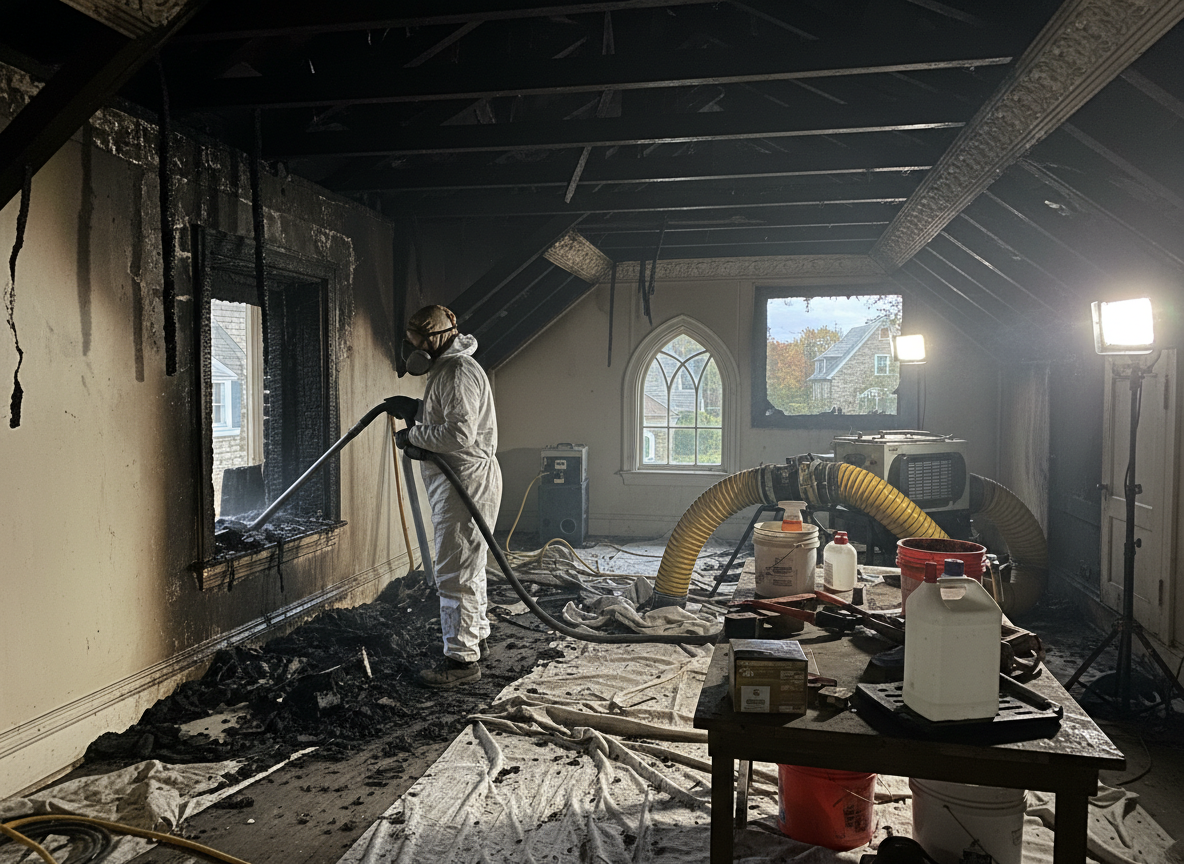
Attic fires in Bryn Mawr homes often start from electrical faults or stored materials and spread quickly through insulation and rafters. Restoration begins with a full inspection to identify hidden ember pockets in cellulose or fiberglass batts that older homes in the area commonly contain. Crews remove charred sections, treat remaining wood with encapsulants to neutralize smoke odor, and replace insulation to current R-value standards required by San Bernardino County building codes. Ventilation paths must be cleared to prevent moisture buildup that leads to mold in the dry climate.
Soot migration through HVAC ducts is a frequent complication here because many Bryn Mawr residences have attic-mounted units connected to the living space. Technicians seal and clean ducts before any reconstruction to stop fine particles from recirculating. Structural checks focus on truss integrity, especially where fires weaken gusset plates; sistering or full replacement follows engineering review. Homeowners should expect temporary roof tarping during the multi-week process to protect against sudden rain.
Final air quality testing confirms that particulate levels meet post-fire safety thresholds before insulation is blown in or laid. This step prevents callbacks when residents return and notice lingering odors from incomplete soot removal. All debris is hauled to approved San Bernardino County facilities, and work is documented for insurance adjusters who routinely visit Bryn Mawr claims.
Technician insight
In Bryn Mawr, the thing that catches most people out with attic fire restoration is how quickly smoke travels down knob-and-tube wiring runs in the older homes along Juanita Street and nearby streets; if you skip pulling those wires during demo you will be back in six months chasing odor.
Hidden ember pocket behind insulation
A small electrical fire in a Bryn Mawr attic left visible char on one truss but left most insulation intact. During removal we found an ember pocket that had smoldered along the top plate for hours. We extended the demo two feet beyond the visible damage, treated the remaining framing, and replaced the full insulation layer before the homeowner returned.
How it works
- 1
Initial Assessment
Technicians arrive within hours, document the fire origin, and map soot and structural damage throughout the attic.
- 2
Containment and Demolition
Plastic barriers isolate the attic while crews remove burned insulation, charred wood, and affected drywall.
- 3
Cleaning and Treatment
HEPA vacuuming, chemical sponging, and odor encapsulants address soot on rafters, trusses, and remaining surfaces.
- 4
Rebuild and Verification
New insulation is installed, ventilation is restored, and independent testing confirms air quality before final walkthrough.
Pricing
Pricing depends on attic size, extent of structural damage, and insulation type; we provide detailed written estimates after inspection.